Choosing the right hearing aid is an important step toward improving your hearing and quality of life. One of the most common questions people ask is whether to choose rechargeable hearing aids or traditional battery-powered hearing aids. Both options are designed to improve hearing, but they differ in convenience, maintenance, battery life, and long-term costs.
Modern hearing aids have advanced significantly, offering features such as Bluetooth connectivity, noise reduction, AI-powered sound processing, and rechargeable lithium-ion batteries. Understanding the differences between rechargeable and traditional hearing aids can help you select the option that best suits your lifestyle, hearing needs, and budget.
In this comparative guide, we’ll explore the pros and cons of rechargeable vs. traditional hearing aids, compare their features, and help you make an informed decision.
Rechargeable vs. Traditional Hearing Aids: What’s the Difference?
The primary difference lies in how they are powered.
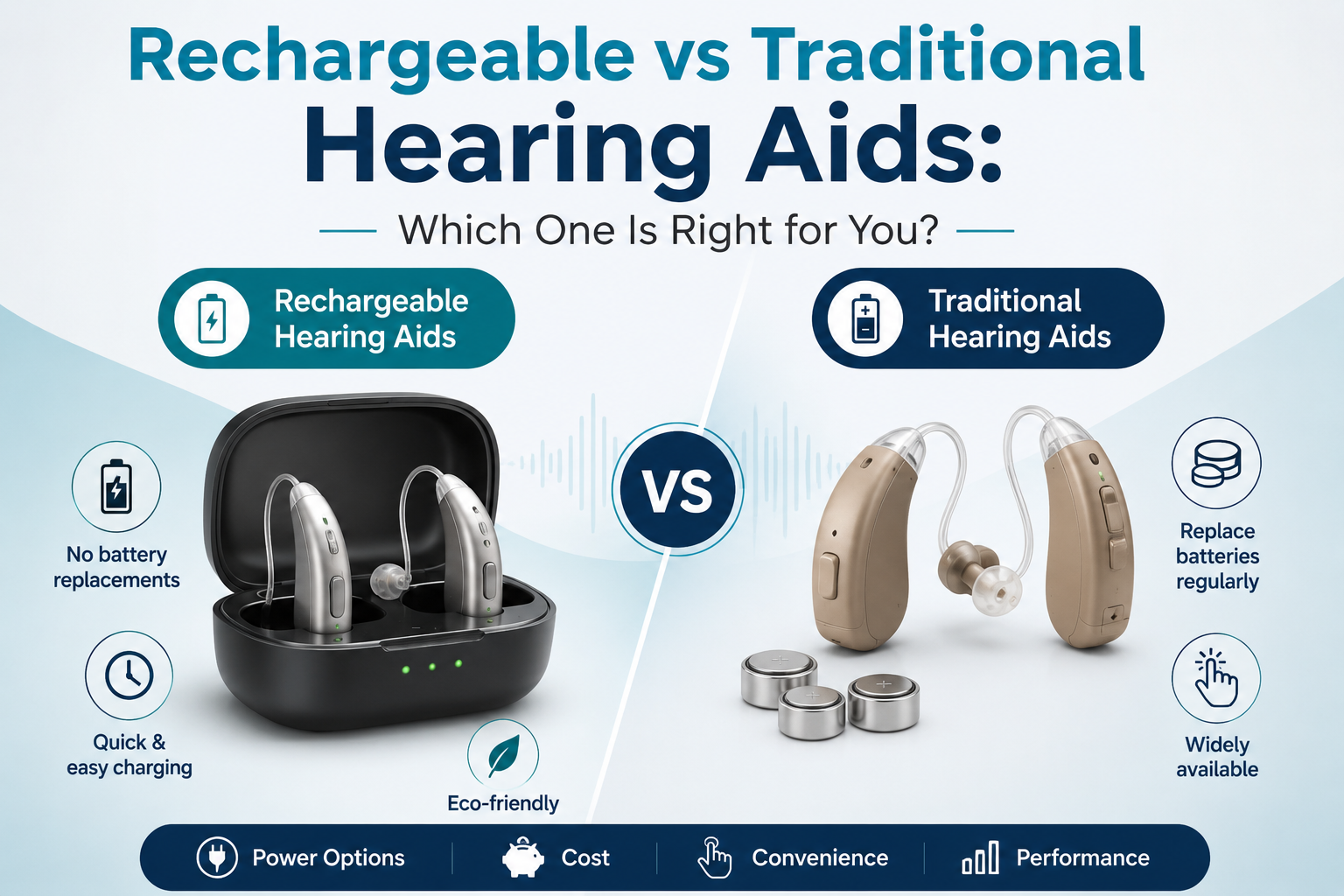
- Rechargeable hearing aids use built-in lithium-ion batteries that are charged using a docking station or charging case.
- Traditional hearing aids use disposable zinc-air batteries that need to be replaced every few days or weeks, depending on usage.
Both types provide excellent sound quality when professionally fitted, but they offer different advantages for different users.
Rechargeable Hearing Aids
Rechargeable hearing aids come with built-in rechargeable batteries that eliminate the need for frequent battery replacements. Simply place the hearing aids in their charger overnight, and they’re ready to use the next day.
Many modern digital hearing aids are available with rechargeable technology, offering enhanced convenience and advanced features for everyday listening.
Advantages of Rechargeable Hearing Aids
- Easy overnight charging
- No need to replace batteries
- Environmentally friendly
- Convenient for seniors and individuals with limited hand dexterity
- Lower ongoing battery replacement costs
- Consistent all-day performance
- Compatible with Bluetooth and smartphone connectivity
Considerations
- Require access to electricity for charging
- Higher initial purchase cost
- Built-in battery may eventually need professional replacement after several years
Traditional Battery-Powered Hearing Aids
Traditional hearing aids use disposable zinc-air batteries that are easily available and simple to replace.
These hearing aids remain a practical choice for many users, especially those who travel frequently or prefer replaceable batteries.
Advantages of Traditional Hearing Aids
- Lower initial cost
- Batteries can be replaced anywhere
- Suitable for people without regular access to charging
- No downtime while charging
Considerations
- Batteries require regular replacement
- Ongoing battery expenses
- Small batteries can be difficult to handle
- Less environmentally friendly due to battery waste
Feature Comparison
| Feature | Rechargeable Hearing Aids | Traditional Hearing Aids |
| Power Source | Rechargeable lithium-ion battery | Disposable zinc-air battery |
| Daily Use | Charge overnight | Replace batteries when needed |
| Maintenance | Low | Moderate |
| Battery Replacement | Not required daily | Required regularly |
| Initial Cost | Higher | Lower |
| Long-Term Cost | Lower battery expenses | Ongoing battery purchases |
| Ease of Use | Excellent | Good |
| Eco-Friendly | Yes | Less eco-friendly |
Which Hearing Aid Is Better for Seniors?
Many seniors prefer rechargeable hearing aids because they eliminate the need to handle tiny disposable batteries.
Rechargeable models are especially beneficial for individuals with:
- Arthritis
- Poor vision
- Limited finger mobility
- Memory concerns
However, traditional hearing aids remain a reliable option for users who prefer replaceable batteries or travel extensively.
Battery Life Comparison
Rechargeable hearing aids typically provide:
- 18–30 hours of use on a full charge
- All-day performance, even with Bluetooth streaming
- Overnight charging convenience
Traditional batteries generally last:
- 3–10 days, depending on battery size
- Usage patterns
- Hearing aid features
- Bluetooth streaming frequency
Cost Comparison
The upfront price of rechargeable hearing aids is generally higher because of their advanced battery technology.
However, over time, they may reduce expenses associated with disposable battery purchases.
If you’re comparing options, our guide on the cost of hearing aid devices in Bangalore explains the factors that influence pricing and helps you choose a solution that fits your budget.
Which Hearing Aid Offers Better Performance?
When professionally fitted, both rechargeable and traditional hearing aids provide excellent sound quality.
Performance depends more on:
- Degree of hearing loss
- Hearing aid programming
- Technology level
- Regular maintenance
- Professional fitting
Whether rechargeable or battery-powered, choosing the right device begins with a comprehensive hearing test in Bangalore to assess your hearing needs accurately.
Choosing the Right Hearing Aid
The best hearing aid depends on your lifestyle and personal preferences.
Rechargeable hearing aids may be ideal if you:
- Prefer convenience
- Want to avoid changing batteries
- Use Bluetooth frequently
- Have reduced hand dexterity
- Are environmentally conscious
Traditional hearing aids may be a better choice if you:
- Travel frequently
- Prefer replaceable batteries
- Want a lower initial investment
- Need immediate battery replacement without charging
Your audiologist can recommend the most suitable option based on your hearing profile and daily activities.
Understanding Hearing Aid Styles
Power source is only one factor when choosing a hearing aid. Selecting the right design is equally important for comfort and performance.
There are several different styles of hearing aids, including Behind-the-Ear (BTE), Receiver-in-Canal (RIC), In-the-Ear (ITE), and Completely-in-Canal (CIC) models, each designed to suit different degrees of hearing loss and cosmetic preferences.
Why a Hearing Test Comes First
Before selecting any hearing aid, it’s essential to undergo a professional hearing evaluation.
Audiologists use different types of hearing tests to determine the type and severity of hearing loss and recommend the most appropriate hearing solution.
If you’re unsure what to expect, our guide on audiometry tests and early hearing assessment explains the process in detail.
Why Choose Shabdha Speech & Hearing?
At Shabdha Speech & Hearing clinic in Banglore, we provide comprehensive hearing evaluations, expert hearing aid fittings, and personalized recommendations based on your hearing profile and lifestyle.
Whether you’re considering rechargeable or traditional hearing aids, our experienced audiologists will guide you through every step—from diagnosis and hearing aid selection to fitting, programming, and ongoing support.
Conclusion
Both rechargeable and traditional hearing aids offer excellent hearing performance when professionally fitted. Rechargeable models provide greater convenience and lower maintenance, while traditional battery-powered hearing aids remain a dependable option for many users.
The best choice depends on your hearing needs, daily routine, budget, and personal preferences. A professional hearing evaluation and expert guidance can help you select a hearing aid that improves communication, comfort, and long-term hearing health.
Frequently Asked Questions
Are Rechargeable Hearing Aids Better Than Traditional Hearing Aids?
Neither option is universally better. Rechargeable hearing aids offer greater convenience, while traditional hearing aids provide flexibility with replaceable batteries. The right choice depends on your lifestyle and hearing needs.
How Long Do Rechargeable Hearing Aid Batteries Last?
Most rechargeable hearing aids provide 18–30 hours of use on a full charge and typically last several years before the battery requires professional replacement.
Are Rechargeable Hearing Aids Worth It?
Yes. Many users find them worthwhile because they eliminate disposable batteries, are easy to use, and provide reliable all-day performance.
Can Seniors Use Rechargeable Hearing Aids?
Absolutely. Rechargeable hearing aids are especially popular among seniors because they are easier to handle and require less maintenance.
Which Hearing Aid Is More Cost-Effective?
Traditional hearing aids usually have a lower upfront cost, while rechargeable hearing aids may reduce long-term expenses by eliminating regular battery purchases.