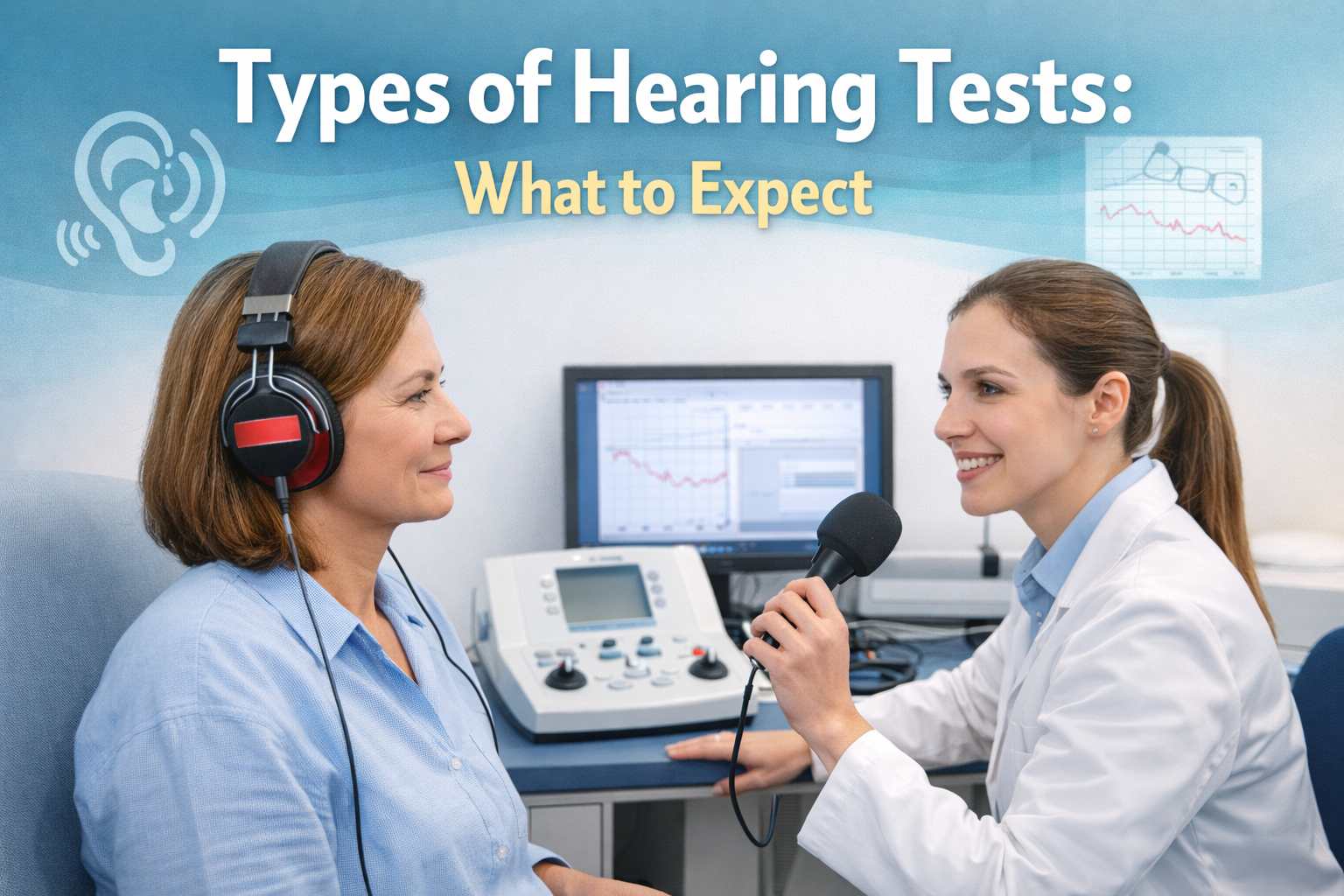
Hearing problems can affect communication, relationships, and overall quality of life. If you’re experiencing difficulty hearing, the first step toward better hearing health is a proper evaluation. Understanding the types of hearing tests and what to expect during the process can help you feel more confident and prepared.
What Are Hearing Tests?
Hearing tests are diagnostic procedures used to evaluate your ability to hear sounds, understand speech, and identify hearing problems.
These tests help determine:
- The type of hearing loss
- The severity of hearing loss
- The underlying cause
When Should You Get a Hearing Test?
You should consider a hearing test if you notice:
- Difficulty understanding conversations
- Frequently asking people to repeat
- Increasing TV or phone volume
- Ringing in the ears (tinnitus)
Learn more about early warning signs here: signs of hearing loss
Types of Hearing Tests
There are several types of hearing tests, each designed to assess different aspects of hearing.
1. Pure Tone Audiometry (PTA)
This is the most common hearing test.
What It Does:
- Measures your ability to hear different frequencies (pitches)
- Determines hearing thresholds
What to Expect:
- You will wear headphones
- Listen to tones at different volumes
- Indicate when you hear a sound
2. Speech Audiometry
This test evaluates how well you can hear and understand speech.
What It Does:
- Measures speech clarity
- Assesses word recognition
What to Expect:
- You will repeat words spoken through headphones
3. Tympanometry
This test checks the function of the middle ear.
What It Does:
- Detects fluid in the ear
- Identifies eardrum movement issues
What to Expect:
- A small probe is placed in the ear
- Air pressure changes are applied
4. Otoacoustic Emissions (OAE)
This test evaluates inner ear (cochlea) function.
What It Does:
- Detects hearing loss in newborns and children
- Assesses hair cell function
What to Expect:
- A small device is placed in the ear
- Sounds are played and responses are recorded
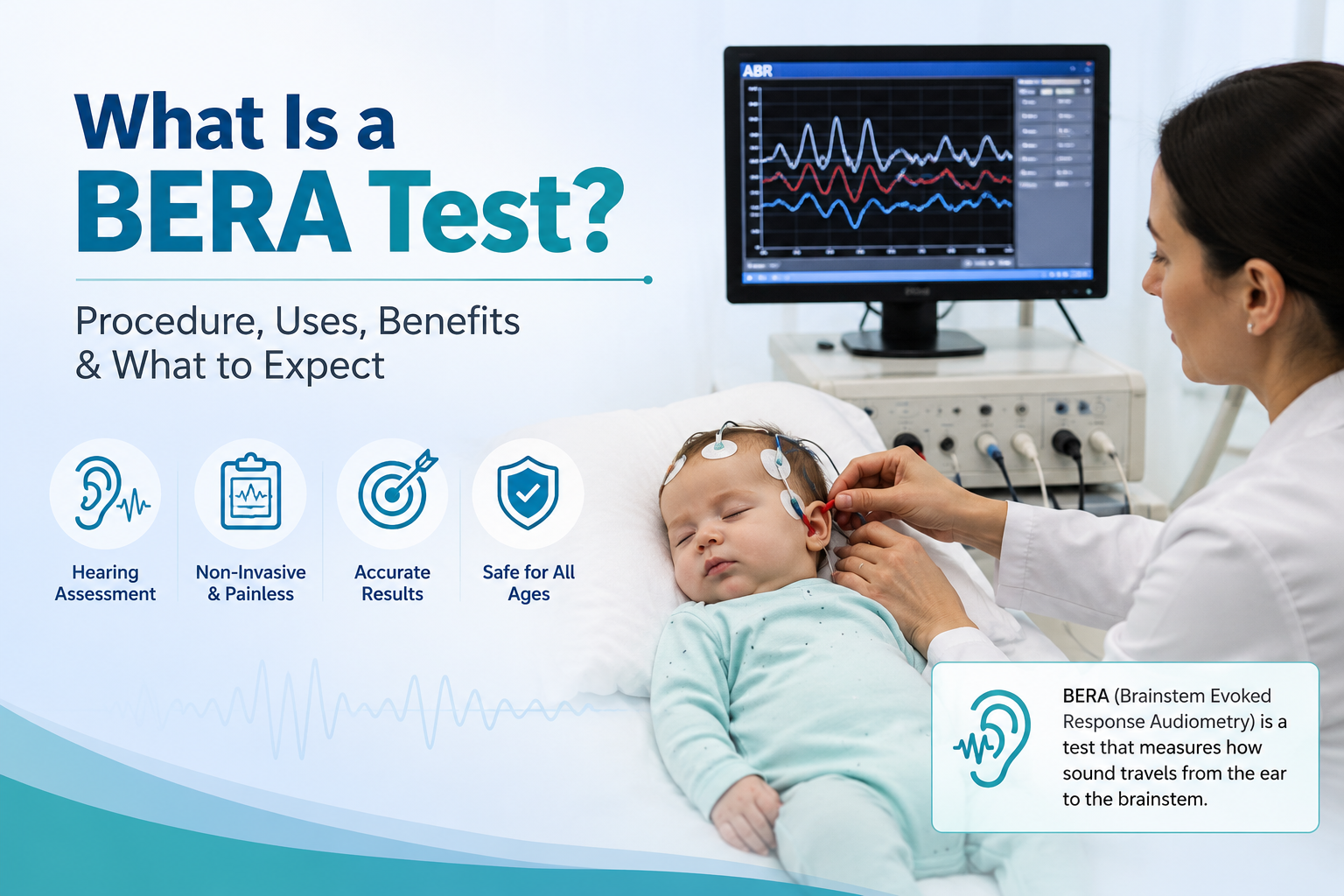
5. Brainstem Evoked Response Audiometry (BERA)
Also known as ABR (Auditory Brainstem Response).
What It Does:
- Measures brain response to sound
- Detects nerve-related hearing problems
What to Expect:
- Electrodes are placed on the scalp
- Sounds are played through earphones
6. Speech-in-Noise Test
This test evaluates your ability to hear in noisy environments.
What It Does:
- Assesses real-life listening ability
What to Expect:
- You will identify words with background noise
7. Vestibular and Balance Tests
These tests assess balance and inner ear function.
They are useful if hearing loss is accompanied by dizziness.
Learn more here: balance and vestibular treatment in Bangalore
What to Expect During a Hearing Test
Many people feel anxious before their first hearing test. However, the process is simple, painless, and quick.
Step-by-Step Process:
- Initial Consultation
The audiologist will discuss your symptoms and medical history. - Ear Examination
Your ears will be checked for blockages or infections. - Hearing Tests
Multiple tests may be conducted depending on your condition. - Results & Diagnosis
The audiologist will explain your results. - Treatment Plan
Recommendations may include hearing aids or therapy.
Book a professional hearing test in Bangalore for accurate evaluation.
How Long Does a Hearing Test Take?
A complete hearing test usually takes 30–60 minutes, depending on the tests required.
Are Hearing Tests Painful?
No, hearing tests are completely painless and non-invasive. They are safe for all age groups, including children and elderly individuals.
What Happens After a Hearing Test?
After the test, your audiologist will:
- Explain your hearing levels
- Identify any hearing loss
- Suggest treatment options
Treatment Options After Diagnosis
If hearing loss is detected, treatment may include:
1. Hearing Aids
Hearing aids are the most effective solution for many types of hearing loss.
They help:
- Amplify sounds
- Improve speech clarity
- Enhance communication
Explore options here: hearing aids in Bangalore
2. Medical Treatment
Some hearing issues may require:
- Medication
- Surgical procedures
- Treatment for infections
3. Hearing Therapy
Therapy can help improve listening and communication skills.
Importance of Early Hearing Testing
Early detection is key to preventing complications.
Benefits:
- Faster treatment
- Better communication
- Improved quality of life
- Reduced risk of cognitive decline
Hearing Tests for Children vs Adults
Children:
- OAE and BERA tests are commonly used
- Helps detect early hearing issues
Adults:
- PTA and speech audiometry are commonly used
- Focus on communication ability
Tips Before Your Hearing Test
- Avoid loud noise exposure before the test
- Clean your ears (if needed)
- Bring previous medical records
Why Choose a Professional Hearing Clinic?
A professional clinic ensures:
- Accurate diagnosis
- Advanced equipment
- Experienced audiologists
- Personalized care
A trusted Speech and Hearing Clinic in Bangalore provides comprehensive hearing evaluation and treatment.
Conclusion
Understanding the types of hearing tests and what to expect can help you take the first step toward better hearing health. Whether you’re experiencing mild symptoms or significant hearing difficulties, timely testing is essential.
With modern diagnostic tools and expert care, hearing problems can be effectively managed.
Book Your Hearing Test Today
Don’t ignore the signs of hearing loss.
Schedule a professional hearing test at Shabdha speech and hearing centre and get expert diagnosis and treatment.
Frequently Asked Questions
1. What is the most common hearing test?
Pure Tone Audiometry (PTA) is the most common hearing test.
2. How often should I get a hearing test?
Every 1–2 years, or earlier if symptoms appear.
3. Are hearing tests safe for children?
Yes, they are completely safe and painless.
4. Can hearing tests detect all types of hearing loss?
Yes, different tests are used to identify various types.
5. Do I need preparation for a hearing test?
No major preparation is required.