Every child develops communication skills at their own pace, but persistent speech or language difficulties can affect learning, confidence, and social interactions. The good news is that early intervention through speech therapy can make a significant difference. Beyond helping children pronounce words correctly, speech therapy supports language development, cognitive growth, academic success, and emotional well-being.
Many parents wonder whether speech therapy is worth the time and effort. Research and clinical experience consistently show that children who receive timely intervention often achieve better communication skills and enjoy long-term developmental benefits.
In this article, we’ll explore the long-term benefits of speech therapy for child development, how it supports different aspects of a child’s growth, and why early intervention is one of the best investments parents can make.
Why Early Speech Therapy Matters
Children learn language rapidly during their early years. When speech or language delays are identified and treated early, children have a greater opportunity to develop age-appropriate communication skills before these challenges affect school performance and social development.
Early speech therapy can help:
- Improve speech clarity
- Develop language and communication skills
- Enhance social interactions
- Support emotional development
- Build confidence
- Improve school readiness
Early identification of speech and language delays gives children the best opportunity to develop age-appropriate communication skills. Parents who notice delayed talking or difficulty understanding language can learn more about speech delay in children, including common signs, causes, and when to seek professional help. Early intervention is associated with better long-term developmental outcomes.Consider consulting an experienced speech therapist in Bangalore for a comprehensive evaluation and personalized treatment plan.
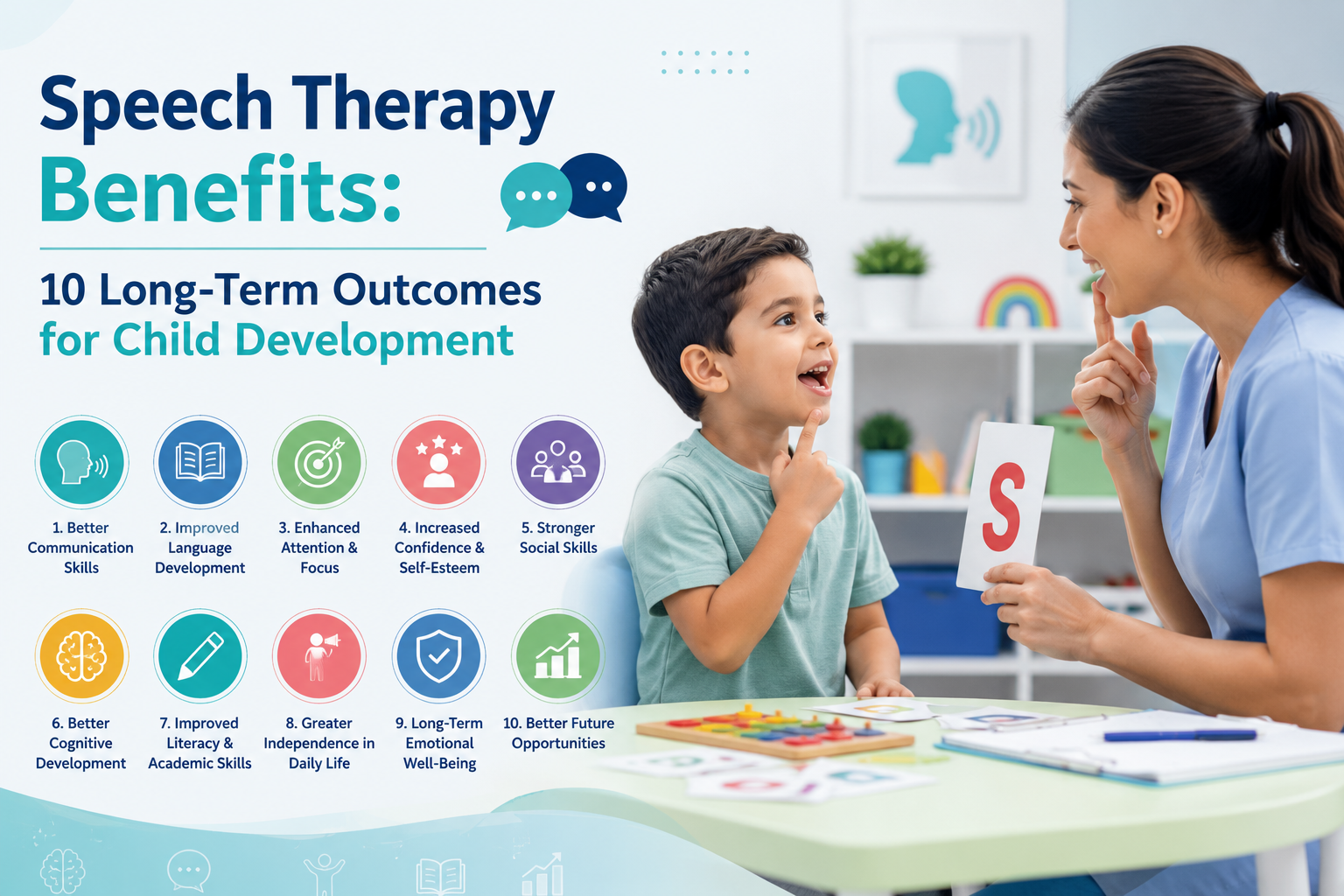
10 Long-Term Benefits of Speech Therapy for Child Development
1. Improves Speech Clarity
One of the primary goals of speech therapy is helping children pronounce sounds correctly.
Children who struggle with articulation may find it difficult for others to understand them. Through structured exercises and consistent practice, speech therapy improves pronunciation, making everyday communication easier and more effective.
Clear speech also boosts confidence in school, at home, and during social interactions.
2. Strengthens Language Development
Speech therapy supports both expressive and receptive language skills.
Children learn to:
- Build larger vocabularies
- Form complete sentences
- Understand instructions
- Express thoughts clearly
- Improve grammar and sentence structure
Strong language skills form the foundation for lifelong learning and communication.
3. Enhances Communication Skills
Communication involves much more than speaking.
Speech therapy teaches children how to:
- Start conversations
- Take turns while speaking
- Maintain eye contact
- Ask and answer questions
- Understand non-verbal communication
These skills improve relationships with family, teachers, and peers.
Families looking for comprehensive support can explore speech and swallowing therapy in Bangalore, where individualized treatment plans address a wide range of communication disorders.
4. Builds Confidence and Self-Esteem
Children who struggle to communicate often become frustrated or avoid speaking in social settings.
As speech becomes clearer and communication improves, children generally experience:
- Greater self-confidence
- Reduced frustration
- Increased classroom participation
- Better peer relationships
Positive communication experiences encourage children to express themselves more freely.
5. Supports Better Academic Performance
Communication skills are closely connected to learning.
Speech therapy helps children develop abilities essential for academic success, including:
- Listening skills
- Reading readiness
- Vocabulary development
- Storytelling
- Classroom participation
- Following instructions
Children with strong communication skills often find it easier to understand lessons and interact confidently in the classroom.
6. Improves Social Skills
Effective communication is essential for building friendships and participating in group activities.
Speech therapy helps children:
- Interact confidently with peers
- Understand social cues
- Express emotions appropriately
- Participate in conversations
- Resolve conflicts through communication
These social skills contribute to healthier relationships throughout life.
7. Encourages Independence
As communication improves, children become more capable of expressing their needs without relying heavily on parents or caregivers.
Speech therapy promotes independence by helping children:
- Ask for help
- Make choices
- Explain feelings
- Participate in daily routines
- Communicate confidently in new environments
These abilities support lifelong personal development.
8. Helps Children with Stammering and Fluency Disorders
Children who stammer may experience anxiety, embarrassment, or reluctance to speak.
Speech therapy focuses on improving fluency while teaching techniques that help children communicate with greater confidence.
Parents can also learn more about speech therapy for stammering and how early intervention improves long-term communication outcomes.
9. Promotes Better Emotional Well-Being
Communication difficulties can sometimes affect emotional health.
Children who cannot express themselves may become:
- Frustrated
- Withdrawn
- Anxious
- Less confident
Speech therapy provides children with the tools to communicate their thoughts and emotions effectively, reducing frustration and improving emotional well-being.
Speech therapy also plays a vital role in helping children with developmental conditions improve their communication abilities. Children diagnosed with autism spectrum disorder often benefit from individualized speech therapy for autism, which focuses on developing language, social interaction, and functional communication skills tailored to their needs.
10. Delivers Long-Term Developmental Benefits
Perhaps the greatest advantage of speech therapy is its lasting impact on overall child development.
Children who receive early intervention often demonstrate improvements in:
- Communication skills
- Academic achievement
- Social participation
- Emotional resilience
- Confidence
- Independence
- Future career readiness
These benefits continue well beyond childhood and contribute to success in adolescence and adulthood.
Children with genetic conditions can also make meaningful progress through early intervention. For example, specialized speech therapy for Down syndrome helps improve speech clarity, language development, feeding skills, and social communication, enabling children to become more independent over time.
When Should a Child Start Speech Therapy?
Parents should consider an evaluation if their child:
- Has delayed speech milestones
- Uses fewer words than expected for their age
- Has difficulty pronouncing sounds
- Struggles to understand simple instructions
- Stammers frequently
- Has difficulty interacting with other children
- Shows frustration when communicating
Early assessment allows specialists to identify concerns and begin appropriate intervention before communication difficulties become more significant.
What Happens During Speech Therapy?
Speech therapy begins with a comprehensive assessment to understand the child’s communication strengths and challenges.
Based on the evaluation, a speech-language pathologist develops a personalized treatment plan that may include:
- Articulation exercises
- Language-building activities
- Vocabulary development
- Fluency therapy
- Social communication training
- Parent-guided home practice
Each session is tailored to the child’s age, developmental level, and therapy goals.
Parents often ask about the financial commitment involved. Understanding the speech therapy cost in Bangalore can help families plan for ongoing therapy and long-term care.
Progress doesn’t stop when a therapy session ends. Practicing activities at home helps children reinforce newly learned skills and builds confidence in everyday communication. Parents can explore these speech therapy exercises at home for kids to support their child’s progress between therapy sessions.
How Long Does It Take to See Results?
Every child progresses differently depending on:
- Age
- Type of speech or language disorder
- Severity of the condition
- Therapy frequency
- Home practice
- Family involvement
Some children show noticeable improvement within a few months, while others benefit from longer-term therapy. Consistent attendance and regular practice at home play an important role in achieving the best outcomes.
Why Choose Shabdha Speech & Hearing?
At Shabdha Speech & Hearing clinic in Bangalore, our experienced speech-language pathologists provide evidence-based therapy for children with speech, language, fluency, and communication disorders. We create individualized therapy plans that focus on helping every child develop strong communication skills, confidence, and independence.
By combining expert care with family involvement, we aim to achieve meaningful, long-term outcomes that support every stage of your child’s development.
Conclusion
Speech therapy is much more than improving pronunciation—it helps children build the communication, language, social, and cognitive skills they need to thrive throughout life. Early intervention can have a lasting impact on a child’s confidence, academic success, relationships, and overall development.
If your child is experiencing speech or language difficulties, seeking professional support at the right time can make a meaningful difference. With personalized therapy and consistent guidance, children can overcome communication challenges and reach their full potential.
Frequently Asked Questions
What Are the Long-Term Benefits of Speech Therapy?
Speech therapy improves communication, language development, academic performance, confidence, social skills, and emotional well-being while supporting lifelong learning and independence.
At What Age Should a Child Start Speech Therapy?
Early intervention is recommended as soon as speech or language delays are identified. Starting therapy early often leads to better outcomes.
Can Speech Therapy Improve School Performance?
Yes. Better communication and language skills support reading, writing, listening, comprehension, and classroom participation.
Does Every Child Progress at the Same Rate?
No. Progress varies depending on the child’s needs, consistency of therapy, and family involvement.
Can Parents Support Speech Therapy at Home?
Absolutely. Practicing therapy activities, reading together, encouraging conversation, and following the therapist’s guidance can significantly improve outcomes.