Communication plays a major role in a child’s social, emotional, and academic development. Some children may take longer to develop speech and language skills, while others may face challenges with pronunciation, vocabulary, or sentence formation. The good news is that regular speech therapy exercises at home for kids can help improve communication skills effectively when practiced consistently.
Parents play an important role in supporting speech development through simple daily activities. Along with professional guidance, home-based speech exercises can help children gain confidence, improve clarity, and strengthen language skills naturally.
If your child experiences speech delay, unclear speech, or difficulty communicating, consulting a professional speech therapist in Bangalore can help identify the right treatment approach.
Why Speech Therapy Exercises at Home Are Important
Children learn communication skills through repetition, listening, interaction, and practice. Home exercises support therapy sessions by reinforcing speech and language skills in a comfortable environment.
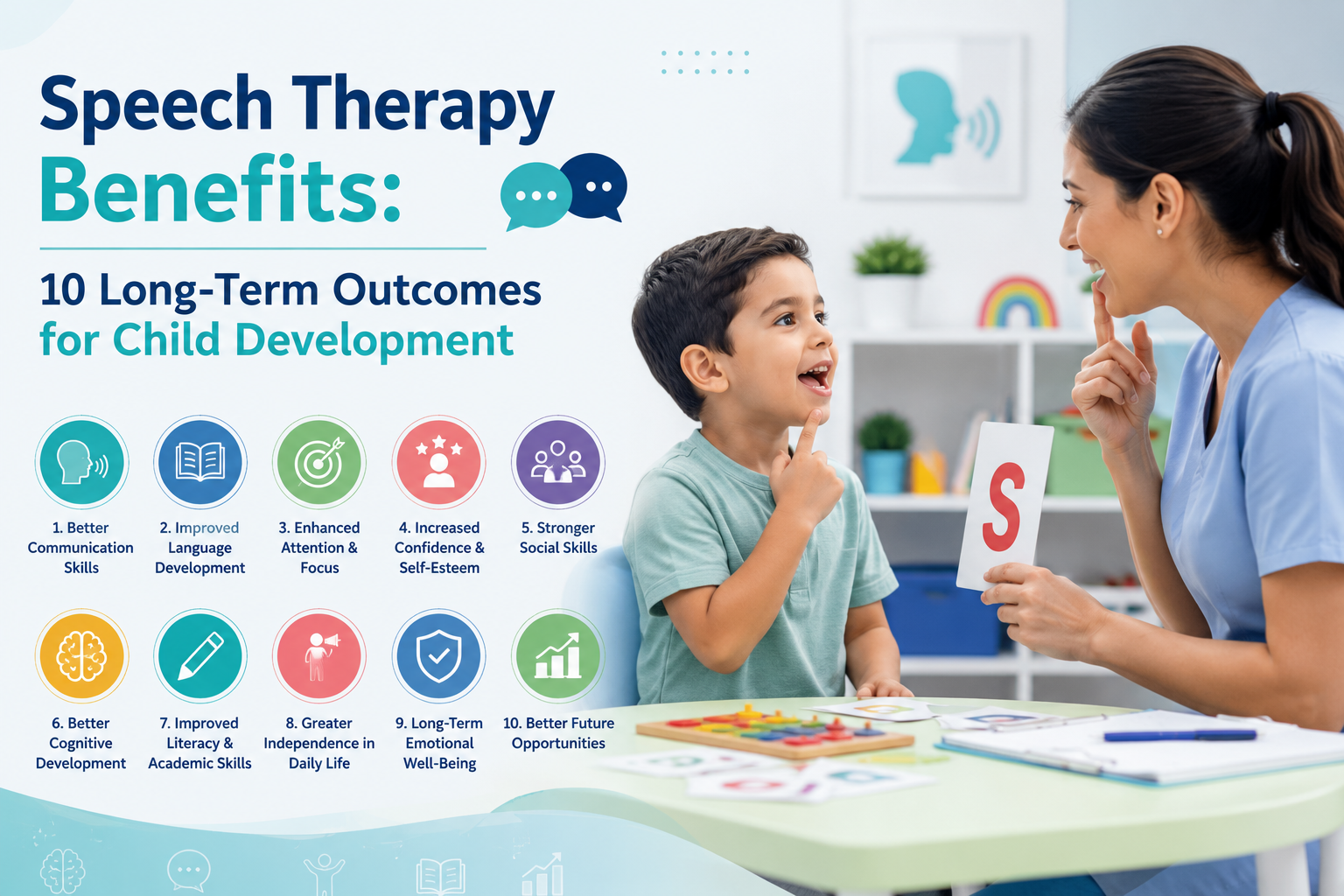
Benefits of home speech therapy activities include:
- Improved pronunciation
- Better vocabulary development
- Increased confidence in speaking
- Stronger communication skills
- Better social interaction
- Faster speech improvement
Consistent practice at home often accelerates progress.
Signs Your Child May Need Speech Therapy
Every child develops differently, but professional evaluation may be helpful if your child:
- Has delayed speech milestones
- Struggles to pronounce words clearly
- Has difficulty understanding instructions
- Stammers frequently
- Uses very limited vocabulary
- Finds it difficult to form sentences
- Avoids speaking or social interaction
Parents should not ignore early signs of speech delay in children, as early intervention can improve communication and learning outcomes significantly.
Best Speech Therapy Exercises at Home for Kids
1. Sound Repetition Exercises
Sound repetition helps children improve pronunciation and articulation.
How to Practice:
- Choose simple sounds like “pa,” “ba,” or “ma”
- Repeat the sounds slowly and clearly
- Encourage your child to imitate you
- Practice daily for 10–15 minutes
This exercise strengthens mouth coordination and speech clarity.
2. Mirror Exercises
Mirror activities help children observe mouth and tongue movements while speaking.
How to Practice:
- Sit with your child in front of a mirror
- Pronounce words slowly
- Ask your child to copy lip and tongue movements
This is especially useful for articulation difficulties.
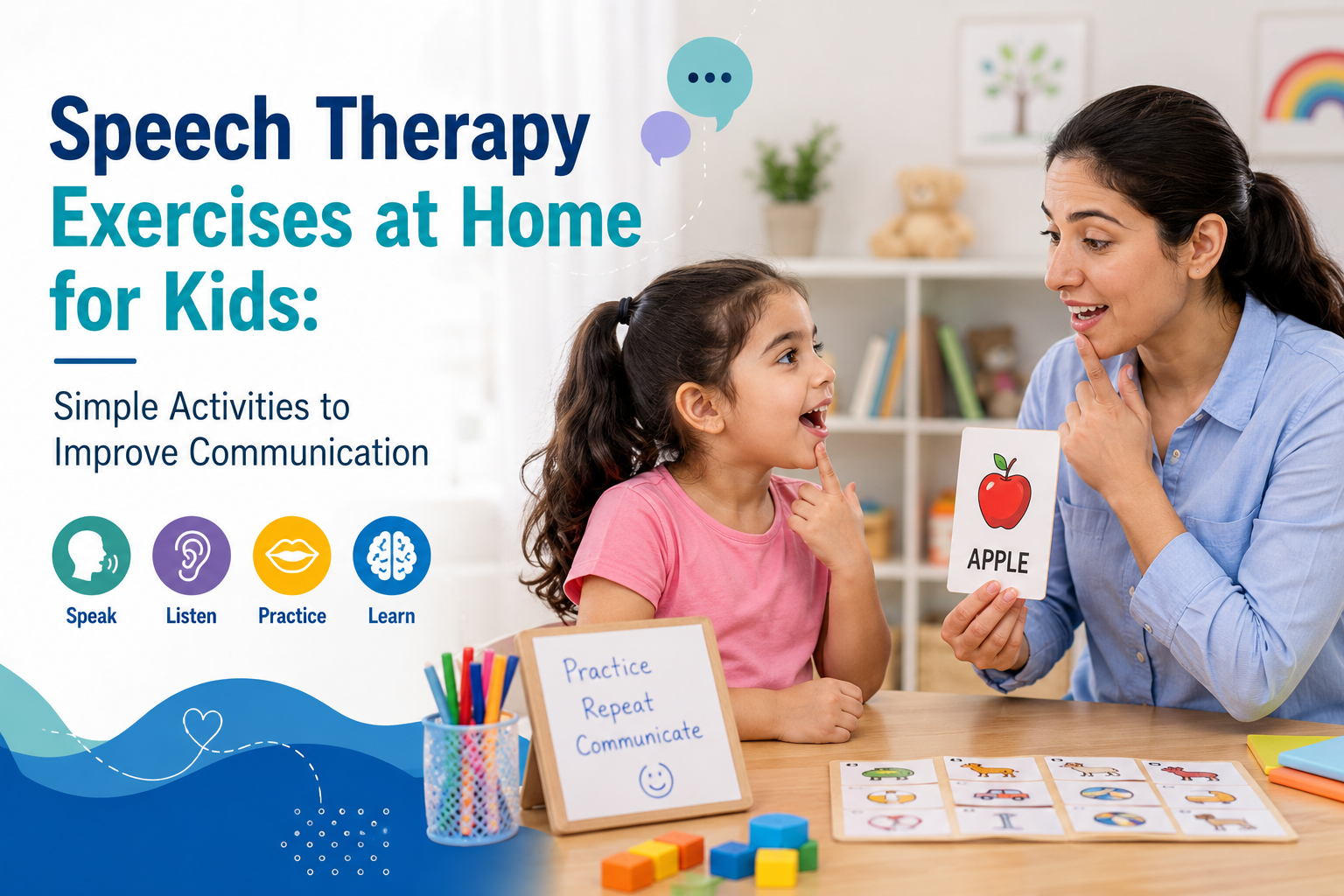
3. Picture Naming Activities
This exercise improves vocabulary and word recognition.
How to Practice:
- Show pictures of animals, fruits, objects, or colors
- Ask your child to identify and name them
- Encourage sentence formation
Example:
- “This is a cat.”
- “The apple is red.”
Helps improve language development and sentence building.
4. Reading Aloud Together
Reading is one of the best speech and language development activities.
Benefits:
- Improves vocabulary
- Enhances pronunciation
- Develops listening skills
- Encourages sentence formation
Choose age-appropriate books with colorful pictures and simple language.
5. Singing Rhymes and Songs
Music-based activities make speech learning fun and interactive.
Benefits:
- Improves rhythm and pronunciation
- Encourages word repetition
- Enhances memory and listening skills
Nursery rhymes are particularly effective for younger children.
6. Tongue and Lip Exercises
Oral motor exercises improve muscle strength used for speech.
Simple Exercises:
- Blowing bubbles
- Whistling
- Puffing cheeks
- Tongue stretching
- Drinking through a straw
These activities improve mouth control and coordination.
7. Storytelling Activities
Storytelling improves imagination, vocabulary, and sentence formation.
How to Practice:
- Ask your child to describe a picture
- Encourage them to narrate simple stories
- Ask questions like:
- “What happened next?”
- “Who is this?”
Helps improve communication confidence.
8. Flashcard Communication Games
Flashcards make learning interactive and engaging.
Activities:
- Match pictures with words
- Identify objects
- Practice action words
Excellent for toddlers and preschoolers.
9. Slow Speech Practice
Some children speak too quickly, affecting clarity.
Tips:
- Encourage slow speaking
- Use short sentences
- Pause between words
Improves speech clarity and fluency.
10. Everyday Conversation Practice
Daily communication is one of the most effective speech therapy techniques.
Encourage Your Child To:
- Ask questions
- Describe daily activities
- Talk during meals
- Express feelings and needs
Regular conversation improves natural language development.
Tips for Parents During Home Speech Therapy
✔ Be Patient
Avoid correcting your child repeatedly or forcefully. Encouragement is more effective than criticism.
✔ Practice Daily
Consistency matters more than long sessions. Even 15–20 minutes daily can help significantly.
✔ Create a Positive Environment
Make speech activities fun and interactive instead of stressful.
✔ Use Simple Language
Speak clearly and use short sentences appropriate for your child’s age.
✔ Reward Progress
Praise and positive reinforcement improve motivation and confidence.
Common Causes of Speech Delay in Children
Speech delays can occur due to:
- Hearing problems
- Developmental delays
- Autism spectrum disorder
- Neurological conditions
- Oral muscle weakness
- Limited communication exposure
A professional evaluation helps identify the underlying cause.
If hearing issues are suspected, scheduling a hearing test in Bangalore is important for accurate diagnosis.
When Should Parents Consult a Speech Therapist?
Consult a specialist if:
- Your child is not speaking age-appropriate words
- Speech is difficult to understand
- Communication problems affect social interaction
- Stammering becomes frequent
- There is no improvement despite practice
Early intervention can significantly improve speech outcomes.
You can consult experienced professionals at a trusted speech and hearing clinic in Bangalore for personalized guidance.
Benefits of Professional Speech Therapy
Professional therapy provides:
- Individualized treatment plans
- Structured exercises
- Expert monitoring
- Faster improvement
- Parent guidance for home activities
Combining professional therapy with home practice gives the best results.
Many parents also want to understand the financial aspect before starting therapy. You can read more about speech therapy cost in Bangalore to plan treatment effectively.
Speech Therapy Activities Based on Age
Toddlers (1–3 Years)
- Naming objects
- Rhymes and songs
- Sound imitation
- Flashcards
Preschoolers (3–5 Years)
- Storytelling
- Sentence-building games
- Reading activities
- Picture description
School-Age Children
- Pronunciation practice
- Conversation exercises
- Reading aloud
- Vocabulary-building activities
Common Mistakes Parents Should Avoid
- Comparing Children
Every child develops differently.
- Pressuring the Child
Avoid forcing speech practice for long periods.
- Ignoring Hearing Problems
Hearing difficulties can affect speech development.
- Inconsistent Practice
Regularity is important for improvement.
Can Speech Delay Improve with Home Exercises?
Yes, many children show significant improvement with:
- Consistent practice
- Professional guidance
- Positive reinforcement
- Early intervention
However, severe speech disorders may require structured therapy sessions with specialists. Understanding the symptoms and causes of speech delay in children helps parents take timely action.
Frequently Asked Questions
1. Can speech therapy be done at home?
Yes, simple speech therapy exercises and activities can be practiced at home regularly.
2. How long should speech exercises be practiced daily?
Around 15–30 minutes daily is usually effective for most children.
3. At what age should speech therapy begin?
Early intervention is recommended if delays are noticed during toddler or preschool years.
4. Do speech therapy exercises really help?
Yes, consistent exercises improve communication, pronunciation, and confidence.
5. When should I consult a speech therapist?
If your child has persistent speech delay, unclear speech, or communication difficulties, professional evaluation is recommended.
Conclusion
Speech development is an important part of a child’s overall growth. Practicing speech therapy exercises at home for kids can improve communication skills, pronunciation, confidence, and social interaction in a supportive and comfortable environment.
Simple activities like reading, storytelling, sound repetition, and daily conversation practice can make a meaningful difference when done consistently. However, professional guidance is equally important to identify the root cause of speech difficulties and create the right treatment plan for your child.
If your child is experiencing speech delay, unclear speech, or communication challenges, consulting experts for speech therapy in Bangalore can help ensure early intervention, personalized care, and better long-term communication outcomes.