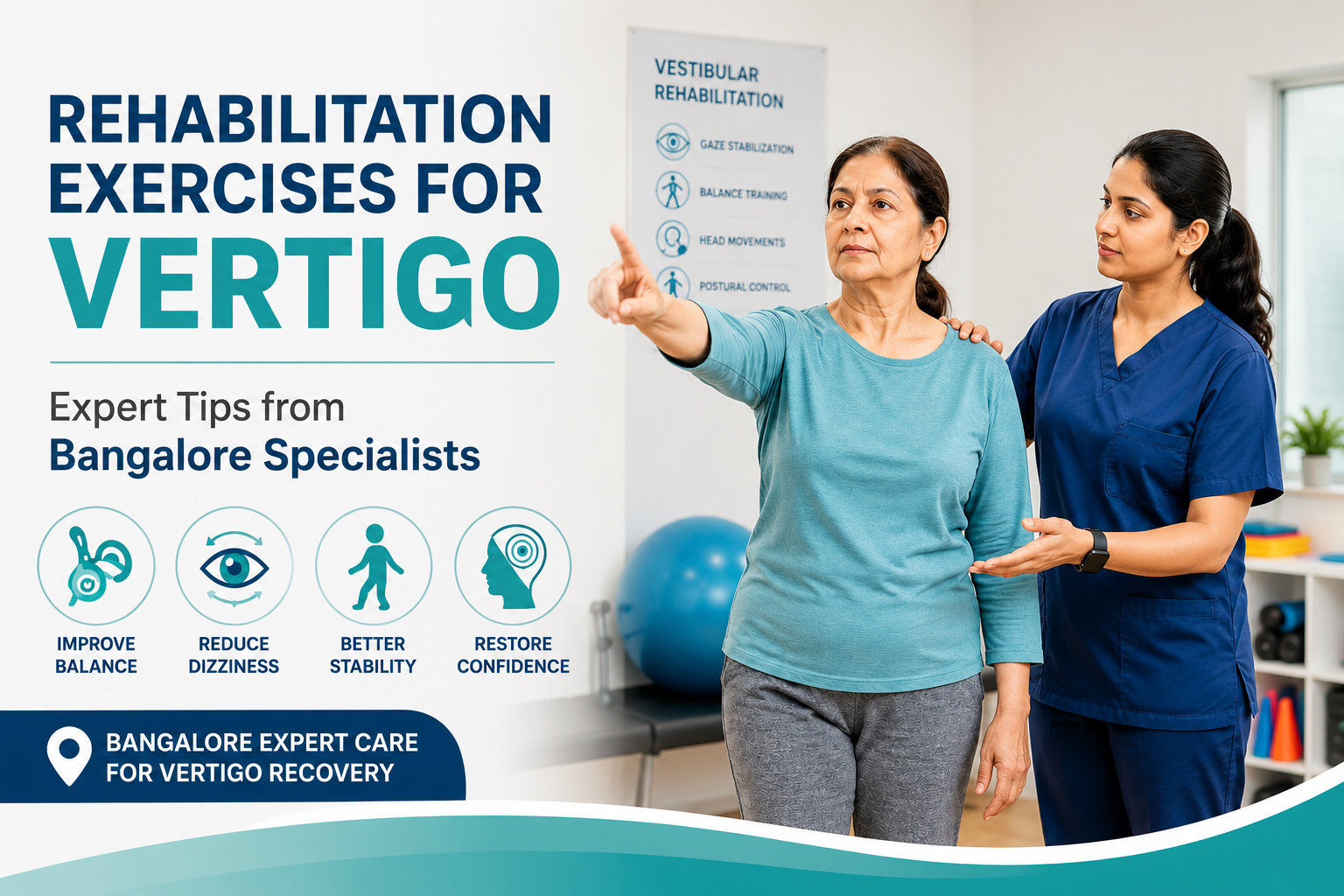
Vertigo can be a disturbing condition that affects your balance, daily routine, and overall quality of life. Many people experience a spinning sensation, dizziness, or unsteadiness due to inner ear disorders or balance-related issues. The good news is that rehabilitation exercises for vertigo can significantly reduce symptoms and improve stability.
In a fast-paced city like Bangalore, where stress, long working hours, and sedentary lifestyles are common, vertigo-related complaints are increasing. For proper diagnosis and targeted care, visiting a specialized vertigo clinic in Bangalore is highly recommended.
What is Vestibular Rehabilitation Therapy?
Vestibular Rehabilitation Therapy (VRT) is a specialized form of physical therapy designed to improve balance and reduce dizziness. It includes a set of structured and targeted exercises that help the brain adapt to changes in the inner ear.
The goal of VRT is to:
- Improve balance and coordination
- Reduce dizziness episodes
- Enhance visual stability
- Improve confidence in movement
- Prevent falls
These exercises are typically recommended after proper evaluation. To understand how specialists identify the root cause, you can read about how vertigo is diagnosed.
How Do Rehabilitation Exercises Help in Vertigo?
Rehabilitation exercises work by retraining the brain and inner ear to function together more effectively. They help:
- Reposition displaced crystals in the ear (common in BPPV)
- Improve coordination between eyes and head movements
- Reduce sensitivity to motion
- Strengthen balance mechanisms
Regular practice improves the brain’s ability to compensate for inner ear imbalances. You can also explore guided routines for vertigo exercises at home
Best Rehabilitation Exercises for Vertigo
1. Epley Maneuver (For Positional Vertigo)
The Epley maneuver is one of the most effective treatments for vertigo caused by positional changes.
Steps:
- Sit upright on a bed
- Turn your head 45 degrees toward the affected side
- Lie back quickly with your head slightly extended
- Hold for 30 seconds
- Turn your head to the opposite side
- Roll onto your side and sit up slowly
👉 This exercise helps reposition the crystals in the inner ear and reduces spinning sensations.
2. Brandt-Daroff Exercises
These exercises are simple and effective for home practice.
Steps:
- Sit upright on a bed
- Quickly lie down on one side
- Stay in position for 30 seconds
- Return to sitting
- Repeat on the opposite side
👉 Perform 5–10 repetitions twice daily for best results.
3. Gaze Stabilization Exercises
These exercises improve coordination between your eyes and head.
Steps:
- Focus on a stationary object
- Move your head side to side while keeping your eyes fixed
- Repeat in an up-and-down motion
👉 These exercises help reduce dizziness triggered by movement.
4. Balance Training Exercises
Balance training is essential to prevent falls and improve stability.
Examples include:
- Standing on one leg
- Walking heel-to-toe in a straight line
- Standing with eyes closed (with support nearby)
👉 These exercises strengthen your body’s balance system over time.
5. Habituation Exercises
These exercises help reduce sensitivity to motion.
How it works:
- Repeated exposure to movements that cause mild dizziness
- Gradual improvement in tolerance
👉 These exercises train the brain to adapt and reduce symptoms.
Expert Tips from Specialists
Specialists in Bangalore recommend the following for better results:
✔ Be Consistent
Perform exercises daily as prescribed.
✔ Start Slowly
Do not rush into advanced movements.
✔ Avoid Sudden Movements
Slow and controlled movements reduce symptom triggers.
✔ Stay Hydrated
Dehydration can worsen dizziness.
✔ Follow Medical Guidance
Exercises should be customized based on diagnosis.
When Should You Start These Exercises?
You can begin rehabilitation exercises:
- After proper diagnosis
- When symptoms are stable
- Under professional supervision initially
Avoid self-diagnosing vertigo, as incorrect exercises may worsen symptoms.
Quick Relief Tips for Sudden Vertigo
If you experience dizziness suddenly during work or daily activities:
- Sit or lie down immediately
- Focus on a fixed object
- Avoid sudden head movements
- Drink water
For more practical strategies, explore quick relief from vertigo
When to Consult a Specialist?
While exercises are effective, medical consultation is necessary if you experience:
- Frequent or severe dizziness
- Sudden hearing loss
- Persistent imbalance
- Nausea and vomiting
- Difficulty walking
You can consult an experienced audiologist in Bangalore for a detailed evaluation and personalized treatment plan.
Benefits of Rehabilitation Exercises for Vertigo
Regular practice of these exercises offers several benefits:
- Reduces frequency and intensity of dizziness
- Improves balance and coordination
- Enhances confidence in daily activities
- Prevents falls and injuries
- Improves overall quality of life
Can Vertigo Be Managed with Exercises?
In many cases, especially positional vertigo, symptoms can be significantly reduced or even resolved with the right exercises. However, effectiveness depends on the underlying cause.
For chronic conditions, exercises play a major role in managing symptoms and improving daily functioning.
Safety Tips While Practicing Exercises
- Always perform exercises in a safe environment
- Use support if needed
- Avoid exercising when symptoms are severe
- Stop immediately if discomfort increases
- Consult a specialist if unsure
Frequently Asked Questions
1. What are the best exercises for vertigo?
Epley maneuver, Brandt-Daroff exercises, gaze stabilization, and balance training are highly effective.
2. Can I do these exercises at home?
Yes, but only after proper diagnosis and initial guidance from a specialist.
3. How long does it take to see improvement?
Most people notice improvement within a few days to weeks.
4. Are these exercises safe?
Yes, when done correctly and under guidance.
5. Do exercises cure vertigo completely?
They can significantly reduce or eliminate symptoms in many cases.
Conclusion
Vertigo can interfere with your daily life, but it is manageable with the right approach. Rehabilitation exercises for vertigo provide a safe, effective, and non-invasive way to reduce dizziness and improve balance.
With consistent practice and proper guidance, these exercises help restore stability and confidence. If symptoms persist, visiting a trusted speech and hearing clinic in Bangalore ensures accurate diagnosis and effective care.