Hearing aids are valuable devices that improve communication, confidence, and overall quality of life for individuals with hearing loss. However, like any electronic device, hearing aids require proper care and regular maintenance to function efficiently over the long term.
Following the right hearing aid maintenance tips can help improve sound quality, prevent damage, reduce repair costs, and extend the lifespan of your device. Whether you use rechargeable hearing aids or battery-operated models, daily cleaning and proper handling are essential for maintaining optimal performance.
At Hearing Aids in Bangalore, audiologists help patients choose, maintain, and optimize hearing aid devices for better long-term hearing support.
Why Is Hearing Aid Maintenance Important?
Hearing aids are exposed daily to:
- Earwax
- Dust and dirt
- Sweat and moisture
- Temperature changes
- Skin oils
Without proper care, these factors can affect sound clarity, battery life, microphone function, and overall hearing aid performance.
Regular hearing aid maintenance helps:
- Improve device durability
- Maintain clear sound quality
- Prevent internal damage
- Reduce costly repairs
- Extend hearing aid lifespan
- Ensure comfortable usage
Routine hearing evaluations and device adjustments also help maintain hearing aid effectiveness over time. Patients using hearing devices should schedule periodic hearing test in Bangalore appointments for monitoring hearing changes and device performance.
Daily Hearing Aid Maintenance Tips
Clean Your Hearing Aids Every Day
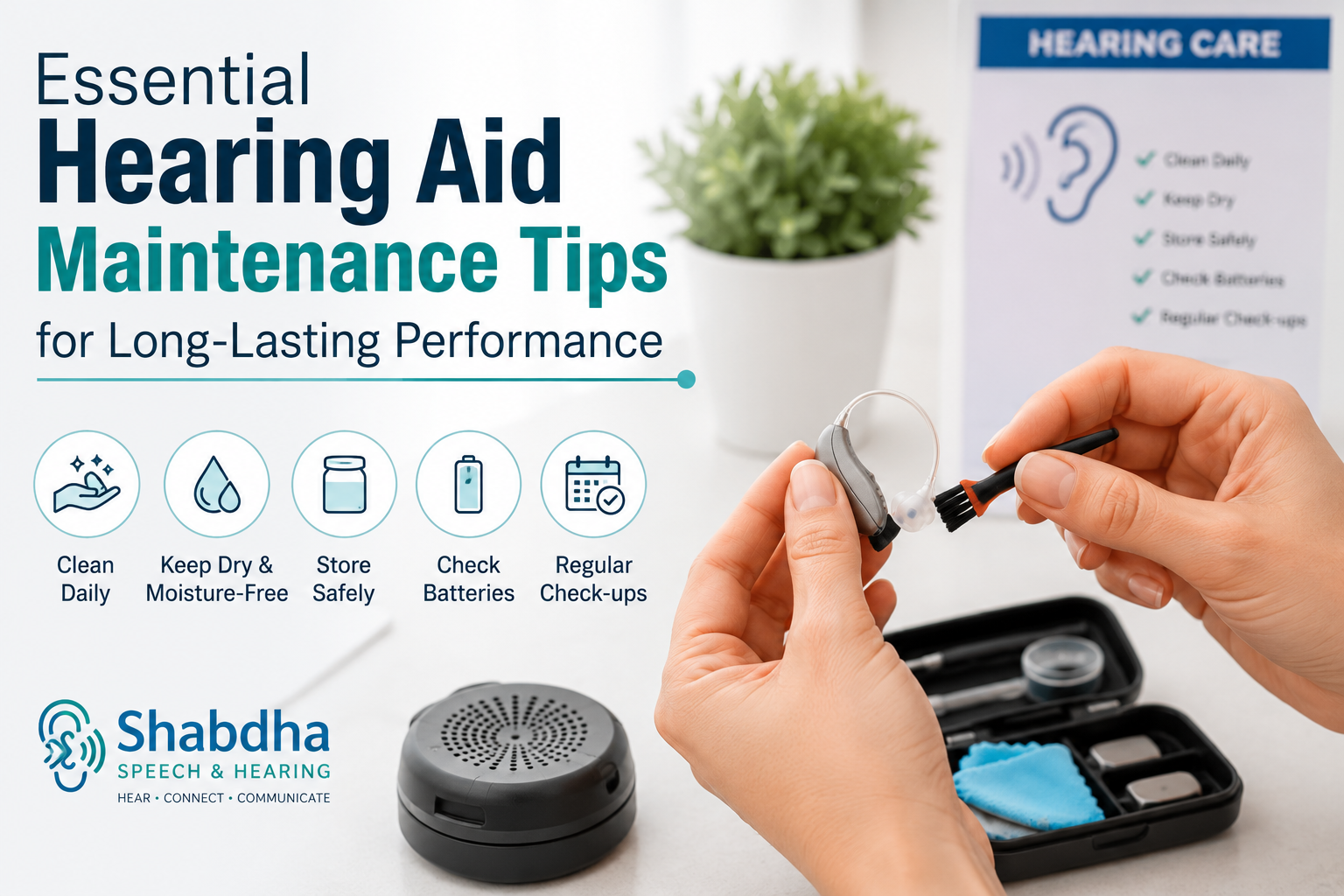
Daily cleaning is one of the most important hearing aid care tips. Earwax and debris can block microphones and sound outlets, reducing hearing clarity.
Cleaning Tips:
- Use a soft, dry cloth
- Clean the microphone openings gently
- Remove visible earwax carefully
- Avoid using sharp objects
- Use hearing aid cleaning tools recommended by your audiologist
Proper cleaning helps maintain sound quality and prevents internal damage.
Keep Hearing Aids Dry
Moisture is one of the biggest causes of hearing aid malfunction.
To Protect Against Moisture:
- Remove hearing aids before bathing or swimming
- Avoid exposing devices to rain or excessive humidity
- Dry your ears before wearing hearing aids
- Use a hearing aid dehumidifier if recommended
Excessive moisture can damage sensitive internal components and batteries.
Store Hearing Aids Properly
Proper storage is essential for long-lasting hearing aid performance.
Storage Recommendations:
- Keep hearing aids in a protective case
- Store devices in a cool, dry place
- Keep away from direct sunlight
- Avoid storing in bathrooms or humid areas
- Keep out of reach of children and pets
Safe storage reduces accidental damage and moisture exposure.
Turn Off Hearing Aids When Not in Use
Turning off hearing aids when not being used helps preserve battery life and reduce unnecessary wear.
For battery-operated devices:
- Open the battery compartment overnight
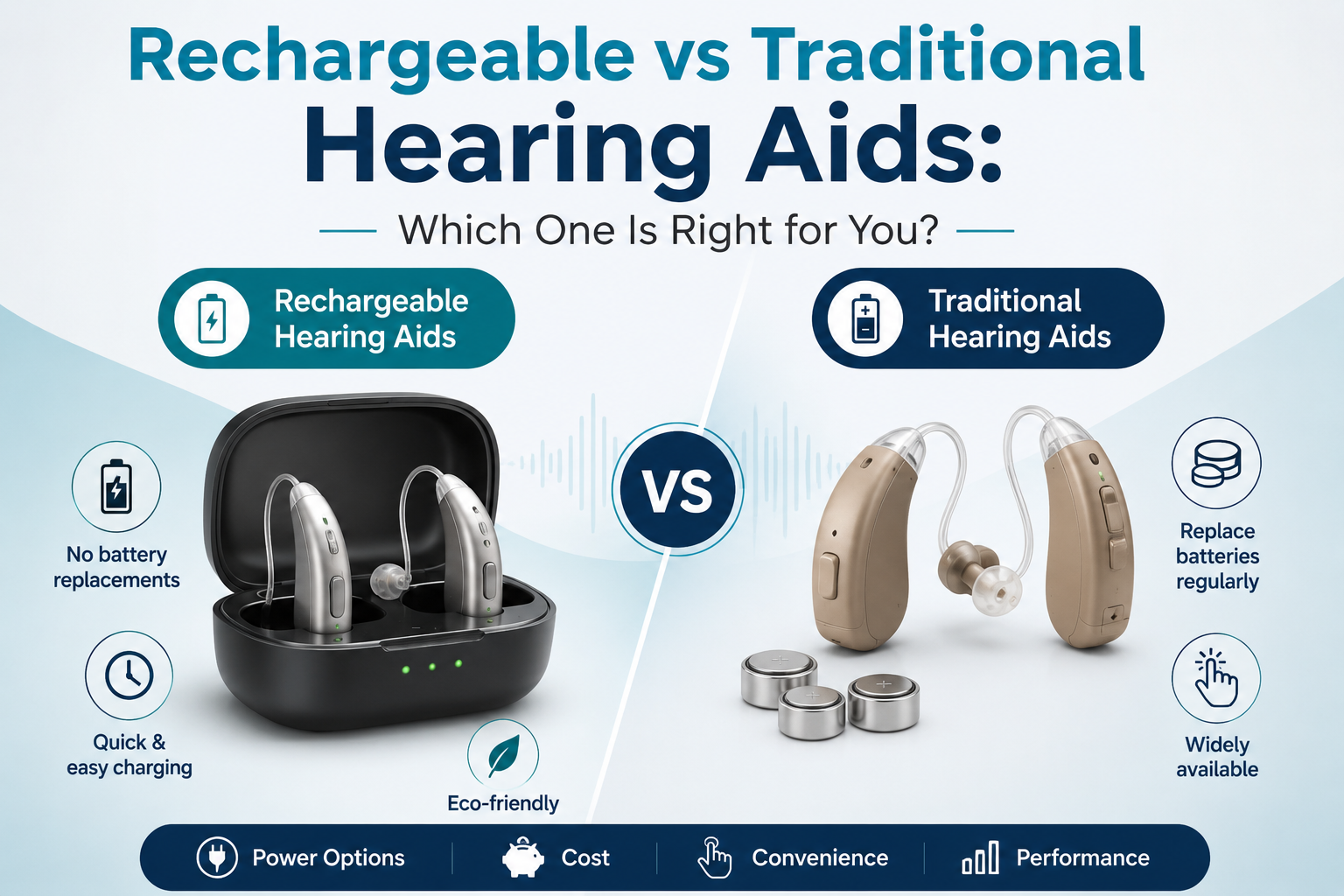
For rechargeable devices:
- Place them in the charging dock properly
Hearing Aid Battery Maintenance Tips
Replace Batteries Regularly
Weak batteries can affect sound clarity and hearing aid performance.
Signs of Battery Issues:
- Distorted sound
- Reduced volume
- Intermittent functioning
- Warning beeps
Always keep spare batteries available if using non-rechargeable hearing aids.
Handle Batteries Carefully
Important Battery Care Tips:
- Wash hands before handling batteries
- Store batteries at room temperature
- Avoid mixing old and new batteries
- Keep batteries away from moisture
Improper battery handling may reduce battery lifespan and device performance.
Follow Charging Guidelines for Rechargeable Hearing Aids
Rechargeable hearing aids should be charged according to manufacturer recommendations.
Best Practices:
- Use original charging accessories
- Avoid overcharging
- Keep charging contacts clean
- Charge devices fully before use
Patients considering advanced rechargeable devices can explore modern digital hearing aids for personalized hearing solutions and improved sound clarity.
Protect Hearing Aids from Earwax Damage
Earwax buildup is a common cause of hearing aid blockage and sound distortion.
To Reduce Earwax Problems:
- Clean hearing aids daily
- Replace wax guards regularly
- Schedule professional cleaning when needed
- Maintain proper ear hygiene
People experiencing hearing difficulties despite using hearing aids should evaluate for possible signs of hearing loss or device-related issues.
Avoid Common Hearing Aid Maintenance Mistakes
Many users unintentionally damage hearing aids through improper handling.
Avoid Using Water or Cleaning Chemicals
Never wash hearing aids directly with water or alcohol-based products.
Avoid Dropping the Device
Hearing aids contain delicate electronic components. Handle them carefully during insertion and removal.
Avoid Heat Exposure
Excessive heat may damage internal circuits and batteries.
Avoid leaving hearing aids:
- Inside parked vehicles
- Near cooking appliances
- Under direct sunlight
Schedule Professional Hearing Aid Servicing
Even with proper home care, professional servicing is important.
Audiologists can:
- Deep-clean hearing aids
- Replace damaged parts
- Update programming settings
- Perform performance checks
- Adjust devices according to hearing changes
Routine servicing helps maintain device efficiency and comfort.
Patients unsure about hearing aid suitability or hearing changes should consider comprehensive types of hearing test evaluations for accurate assessment.
People planning to purchase hearing devices can also explore the detailed guide on cost of hearing aid devices in Bangalore to understand pricing, features, and available device options.
How Long Do Hearing Aids Last?
The average lifespan of hearing aids is generally between 3 to 7 years depending on:
- Device quality
- Maintenance routine
- Frequency of use
- Moisture exposure
- Earwax accumulation
Proper maintenance can significantly improve device longevity and performance.
Signs Your Hearing Aids Need Professional Attention
Consult your audiologist if you notice:
- Sudden sound reduction
- Distorted or unclear sound
- Whistling noises
- Intermittent functioning
- Physical damage
- Rapid battery drainage
Ignoring these signs may worsen device problems over time.
Importance of Regular Hearing Check-Ups
Hearing levels may change gradually over time. Regular hearing evaluations help ensure that hearing aids continue providing effective support.
At Speech and Hearing Clinic in Bangalore, audiologists provide hearing assessments, hearing aid fitting, maintenance support, and personalized hearing care services.
Tips for First-Time Hearing Aid Users
Be Patient During Adjustment
It may take time for your brain to adapt to amplified sounds.
Follow Audiologist Instructions
Proper insertion, cleaning, and maintenance techniques improve device comfort and effectiveness.
Attend Follow-Up Visits
Regular follow-ups help optimize hearing aid programming and user comfort.
Conclusion
Proper hearing aid care plays a major role in maintaining sound clarity, comfort, and long-term performance. Simple daily maintenance habits can help prevent costly repairs and improve device lifespan significantly.
If you need hearing aid support, device servicing, hearing evaluations, or personalized hearing solutions, consult experienced audiologists at Speech and Hearing Clinic in Bangalore in Bangalore.
Frequently Asked Questions
How often should hearing aids be cleaned?
Hearing aids should ideally be cleaned daily to remove earwax, dust, and moisture buildup.
Can earwax damage hearing aids?
Yes. Excessive earwax can block microphones and sound outlets, reducing hearing aid performance.
How can I make my hearing aids last longer?
Proper cleaning, safe storage, moisture protection, and regular servicing can help extend hearing aid lifespan.
Is professional hearing aid servicing necessary?
Yes. Professional servicing helps identify internal issues, clean components thoroughly, and maintain optimal performance.
When should hearing aid batteries be replaced?
Replace batteries when you notice weak sound, low volume, distortion, or warning alerts from the device.