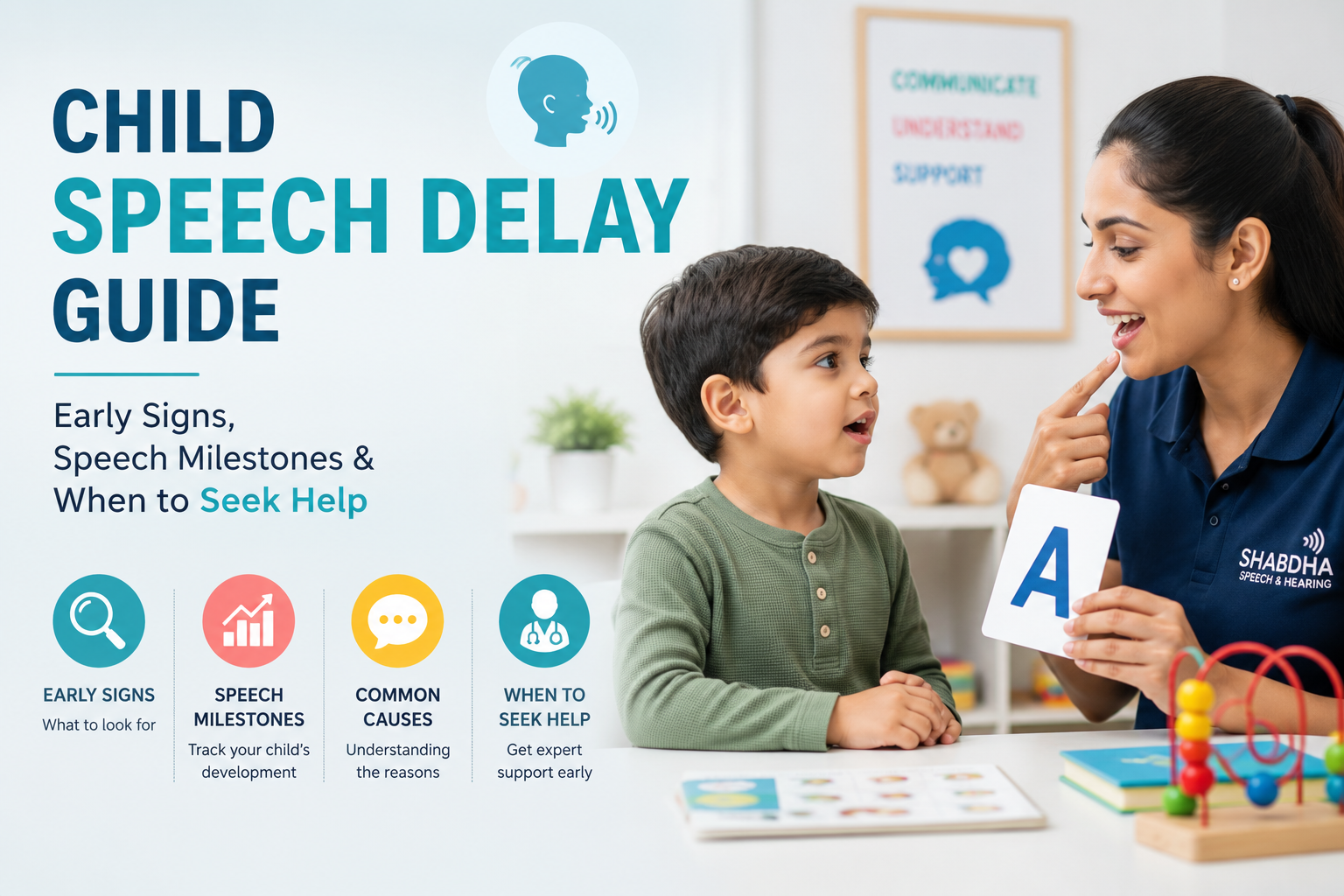
Every child develops at their own pace, but there are expected speech and language milestones that help parents understand whether their child’s communication skills are progressing normally. While some children start talking earlier than others, persistent delays in speech development may indicate the need for professional evaluation and early intervention.
If you’re wondering, “Is my child talking as expected?” or “When should I seek help for my child’s speech delay?”, you’re not alone. Many parents have these concerns, especially during the toddler years. Understanding the common causes and signs of speech delay in children can help parents take the right steps at the right time.
This child speech delay guide explains the early signs of speech delay, age-wise speech milestones, common causes, and when to consult a speech therapist.
What Is Child Speech Delay?
A child speech delay occurs when a child does not develop speech and language skills according to expected developmental milestones. Children with speech delay may have difficulty producing words, forming sentences, or expressing their thoughts clearly.
Speech delay is different from language delay. Speech refers to how words are pronounced, while language includes understanding, processing, and using words to communicate.
Some children may simply be “late talkers,” while others may require speech therapy to improve communication skills. A professional assessment helps determine the underlying cause and the most appropriate treatment plan.
Early Signs of Speech Delay
Recognizing the early signs of speech delay allows parents to seek help before communication difficulties begin affecting learning and social development.
You should consider a speech evaluation if your child:
- Does not respond to their name consistently.
- Makes limited eye contact while communicating.
- Uses very few words for their age.
- Has difficulty combining two or more words.
- Struggles to understand simple instructions.
- Relies mainly on gestures instead of speaking.
- Has speech that is difficult for others to understand.
- Shows frustration when trying to communicate.
- Has limited interaction with family members or peers.
If you notice one or more of these signs, consulting an experienced speech therapist in Bangalore can help identify the cause and recommend appropriate intervention.
Speech Milestones by Age
Understanding age-appropriate speech milestones helps parents monitor their child’s communication development.
By 12 Months
Most babies can:
- Respond to their name.
- Babble using sounds like “mama” or “dada.”
- Understand simple words.
- Use gestures such as waving or pointing.
By 18 Months
Children typically:
- Speak around 10–20 words.
- Follow simple instructions.
- Identify familiar people or objects.
- Attempt to imitate words.
By 2 Years
Most toddlers should:
- Use at least 50 words.
- Combine two-word phrases.
- Ask simple questions.
- Name familiar objects.
If your child says very few words by age two, it may be helpful to discuss your concerns with a speech-language pathologist.
By 3 Years
Children generally:
- Speak in short sentences.
- Use 200–500 words.
- Answer simple questions.
- Be understood by familiar adults most of the time.
By 4–5 Years
Most children can:
- Speak in complete sentences.
- Tell simple stories.
- Follow multi-step instructions.
- Be understood by most people.
Missing several milestones may indicate the need for professional assessment.
Common Causes of Speech Delay
Speech delay can occur for various reasons, including:
- Hearing loss
- Recurrent ear infections
- Developmental delays
- Autism spectrum disorder
- Oral-motor difficulties
- Neurological conditions
- Intellectual disabilities
- Environmental factors such as limited language exposure
Because hearing plays a crucial role in speech development, children with delayed speech often benefit from a hearing test in Bangalore to rule out hearing-related causes.
Does Every Late Talker Need Speech Therapy?
Not necessarily.
Some children catch up naturally, while others require professional intervention.
Factors considered during evaluation include:
- Age
- Vocabulary size
- Understanding of language
- Social interaction
- Family history
- Hearing ability
A qualified speech-language pathologist can determine whether therapy is needed.
When Should Parents Seek Help?
Parents should seek professional advice if their child:
- Is not babbling by 12 months.
- Has very few words by 18–24 months.
- Does not combine two words by age two.
- Has unclear speech after age three.
- Stops using previously learned words.
- Shows difficulty understanding simple instructions.
- Has concerns about hearing or communication.
If you’re unsure whether your child’s communication is developing normally, reading more about speech delay in children can help you recognize the warning signs and understand when professional intervention is recommended.
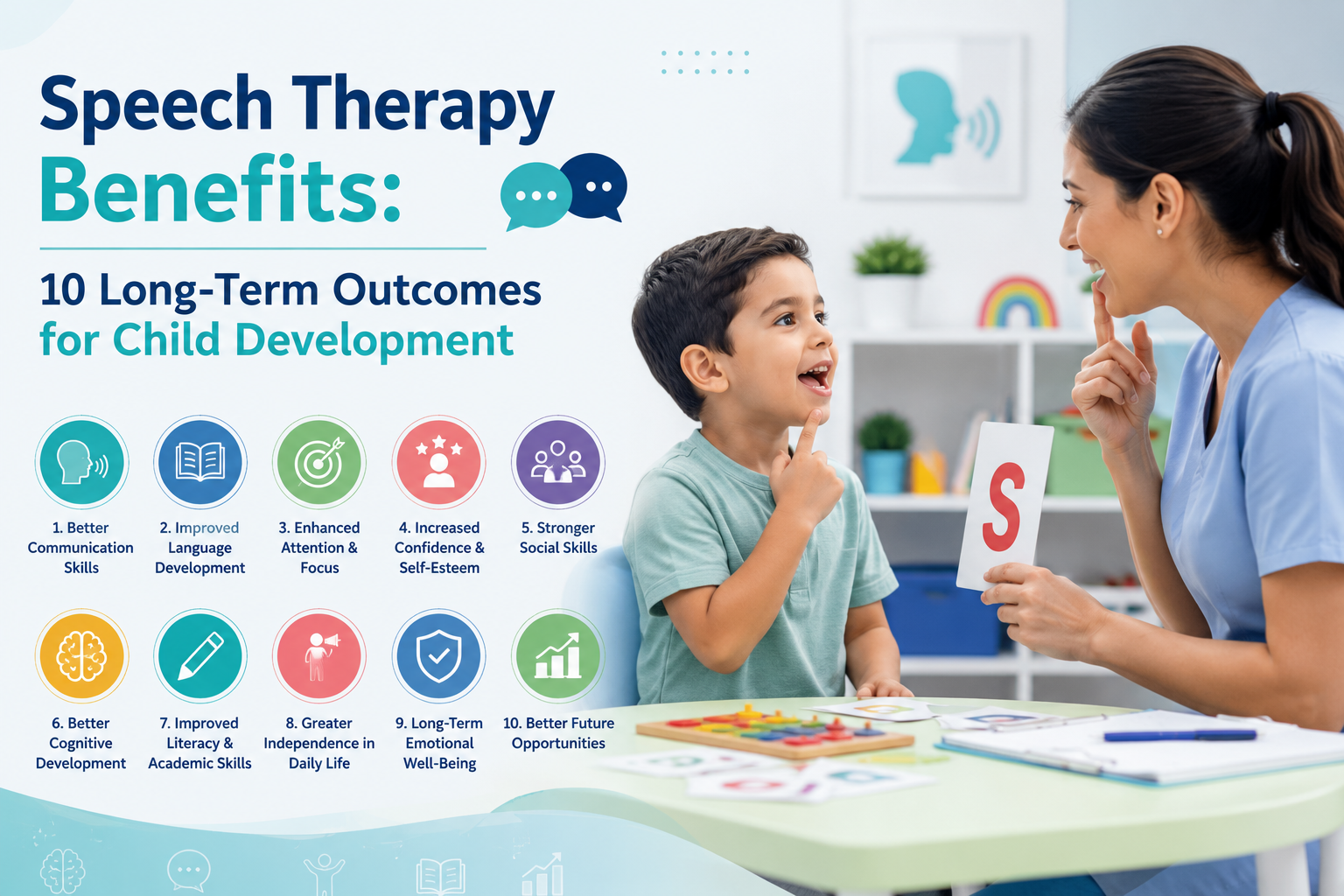
How Speech Therapy Helps Children with Speech Delay
Speech therapy focuses on improving communication through individualized, evidence-based techniques.
Therapy may include:
- Speech sound practice
- Language development activities
- Vocabulary building
- Play-based communication exercises
- Oral-motor exercises (when required)
- Parent training and home practice
Our speech therapy in Bangalore programs are tailored to each child’s developmental needs, helping them build confidence, improve language skills, and communicate more effectively.
How Parents Can Support Speech Development at Home
Parents play a vital role in their child’s language development.
Here are a few simple ways to encourage communication:
Talk Throughout the Day
Describe everyday activities, objects, and actions to expose your child to new vocabulary.
Read Together Daily
Reading books improves vocabulary, listening skills, and sentence formation.
Encourage Conversation
Ask open-ended questions instead of questions that only require “yes” or “no” answers.
Limit Screen Time
Excessive screen exposure can reduce opportunities for meaningful interaction.
Sing Songs and Rhymes
Music and repetition help children learn sounds and words more easily.
Celebrate Communication
Praise your child for attempting new words rather than focusing on mistakes.
Consistent interaction at home complements professional therapy.
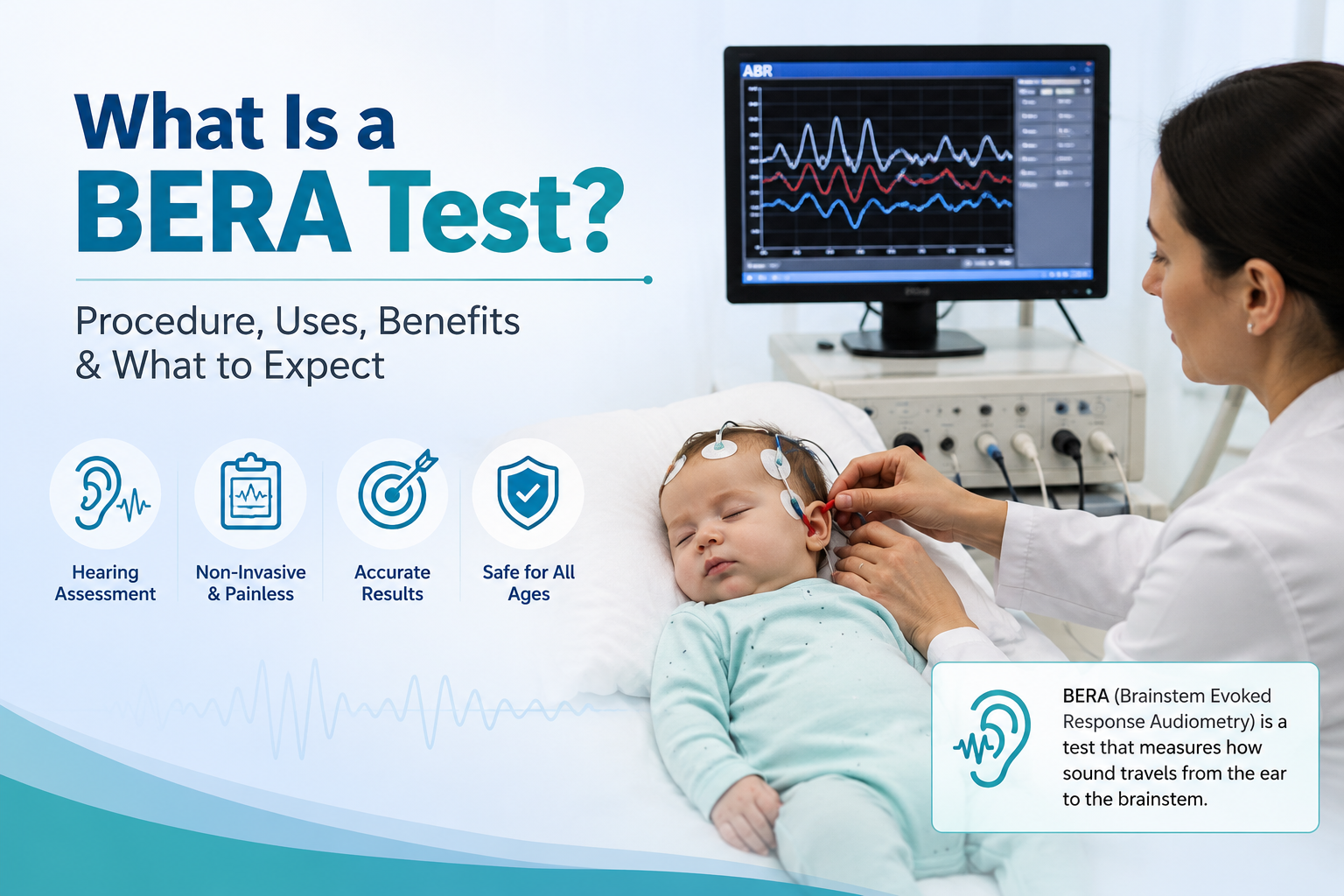
The Importance of Hearing Evaluation
Many parents are surprised to learn that hearing difficulties can affect speech development.
Even mild hearing loss may prevent children from hearing sounds clearly enough to learn words correctly.
If hearing concerns are suspected, your child may benefit from an audiometry assessment or other age-appropriate hearing evaluations recommended by an audiologist.
Why Early Intervention Matters
Research consistently shows that children who receive early speech therapy often achieve better communication outcomes than those whose treatment is delayed.
Benefits of early intervention include:
- Improved speech clarity
- Better language development
- Increased confidence
- Enhanced social skills
- Improved school readiness
- Stronger academic performance
Many parents also want to understand the speech therapy cost in Bangalore before beginning treatment. The overall cost depends on factors such as the child’s condition, therapy frequency, and treatment duration. Understanding these aspects helps families plan early intervention with confidence.
Why Choose Shabdha Speech & Hearing?
At Shabdha Speech & Hearing clinic in Bangalore, our experienced speech-language pathologists provide comprehensive speech and language evaluations for children of all ages. We use evidence-based, child-friendly therapy techniques to help children improve communication skills while actively involving parents throughout the treatment process.
Whether your child is a late talker or experiencing more significant speech and language challenges, our personalized therapy programs are designed to support long-term communication success.
Conclusion
Every child develops differently, but persistent speech delays should never be ignored. Recognizing the early signs, understanding age-appropriate speech milestones, and seeking timely professional guidance can make a significant difference in your child’s communication development.
If you have concerns about your child’s speech or language skills, early evaluation is the best first step. With the right support, many children overcome speech delays and develop the confidence and communication skills they need to thrive at home, in school, and in everyday life.
Frequently Asked Questions
What Are the Early Signs of Speech Delay?
Common signs include limited vocabulary, difficulty combining words, poor understanding of language, unclear speech, and reduced social communication.
At What Age Should a Child Start Talking?
Most children say their first meaningful words around 12 months and begin combining two words by approximately two years of age.
Can Speech Delay Be Treated?
Yes. Many children make excellent progress with early speech therapy and consistent support at home.
Does Hearing Loss Cause Speech Delay?
Yes. Hearing loss is one of the most common causes of delayed speech development, making hearing evaluations an important part of assessment.
When Should I See a Speech Therapist?
If your child is missing important speech milestones or you’re concerned about their communication, it’s best to seek professional advice as early as possible.