
Vertigo is a condition that causes a sensation of spinning or movement even when a person is standing still. Many individuals describe vertigo as feeling like the room is spinning around them. Although vertigo itself is not a disease, it is a symptom that usually indicates a problem in the inner ear, brain, or balance system.
Because vertigo can have multiple causes, doctors use a combination of medical history, physical examinations, and specialized tests to diagnose it accurately. Understanding how vertigo is diagnosed helps patients seek the right treatment and manage dizziness effectively.
In this article, we will explain the common tests doctors use to identify the underlying cause of vertigo and balance disorders.
Understanding Vertigo and Its Symptoms
Vertigo usually occurs when the balance system of the body is affected. The vestibular system, which includes the inner ear and certain parts of the brain, plays an essential role in maintaining balance and spatial orientation.
Common symptoms of vertigo include:
- A spinning sensation
- Loss of balance or instability
- Nausea or vomiting
- Blurred vision
- Ringing in the ears (tinnitus)
- Difficulty focusing
People experiencing frequent dizziness or spinning sensations should consult a vertigo specialist to determine the exact cause and receive proper treatment. If you are experiencing these symptoms, visiting a vertigo specialist in Bangalore can help you get a comprehensive evaluation and diagnosis.
Step 1: Medical History and Symptom Assessment
The first step in diagnosing vertigo involves understanding the patient’s symptoms and medical history.
Doctors usually ask several important questions, such as:
- When did the dizziness start?
- How long do vertigo episodes last?
- Do certain head movements trigger dizziness?
- Are there associated symptoms like hearing loss or headaches?
This information helps doctors determine whether vertigo is related to inner ear disorders, neurological issues, or other health conditions.
A detailed clinical evaluation helps doctors decide which diagnostic tests may be necessary.
Step 2: Physical Examination
After reviewing the patient’s symptoms, doctors perform a physical examination to assess balance, coordination, and neurological function.
The examination may include:
- Checking eye movements
- Evaluating posture and balance
- Testing coordination and reflexes
- Observing walking patterns
Doctors also look for nystagmus, which is an involuntary movement of the eyes that often indicates a vestibular disorder.
Balance disorders are commonly linked to problems in the vestibular system. Advanced diagnostic services such as balance and vestibular testing in Bangalore can help identify abnormalities in the balance system.
Step 3: Positional Tests for Vertigo
One of the most common causes of vertigo is Benign Paroxysmal Positional Vertigo (BPPV), which occurs when tiny calcium crystals inside the inner ear move into the wrong position.
Doctors perform positional tests to diagnose this condition.
Dix-Hallpike Test
The Dix-Hallpike maneuver is commonly used to diagnose BPPV.
During the test:
- The patient sits upright on an examination table.
- The doctor quickly moves the patient into a lying position while turning the head.
- The doctor observes eye movements and vertigo symptoms.
If dizziness and abnormal eye movements occur, the test may confirm BPPV.
Step 4: Vestibular Function Tests
If positional tests do not clearly identify the cause, doctors may recommend specialized vestibular tests that evaluate how the inner ear balance system works.
These tests analyze how the brain, eyes, and inner ear coordinate to maintain balance.
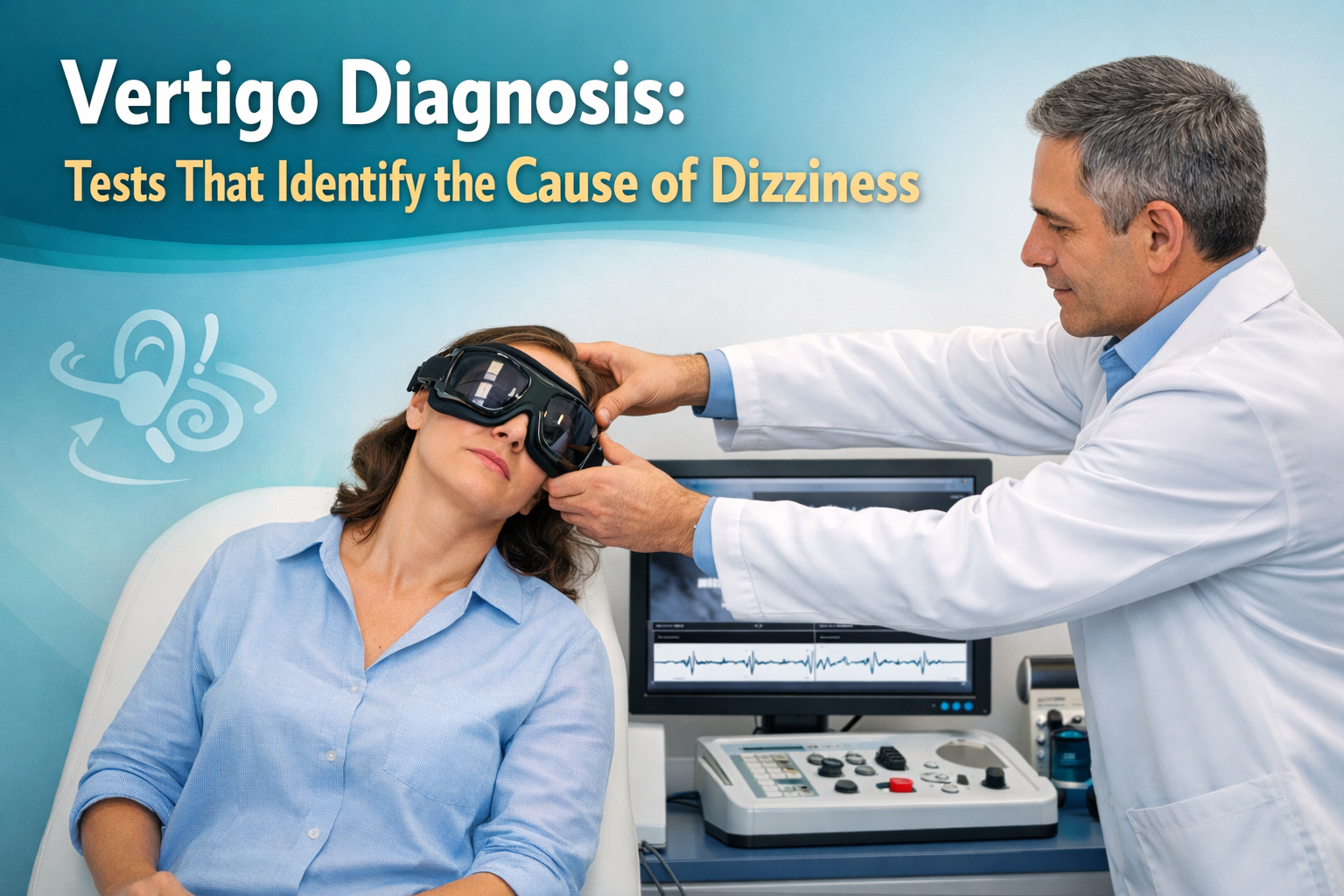
Videonystagmography (VNG)
Videonystagmography records eye movements using special video goggles. Since the inner ear and eye muscles are closely connected, abnormal eye movements can indicate vestibular dysfunction.
Video Head Impulse Test (vHIT)
The vHIT test measures how the inner ear responds to sudden head movements. During this test, the doctor gently moves the patient’s head while tracking eye movements.
Dynamic Visual Acuity Test
This test evaluates how clearly a person can see while moving their head. If vision becomes blurred during head movement, it may indicate a vestibular disorder.
These diagnostic methods are widely used in specialized vertigo and balance clinics.
Step 5: Hearing Tests
Vertigo is often associated with inner ear conditions that also affect hearing. Because of this, doctors frequently recommend hearing tests during the diagnostic process.
Common hearing evaluations include:
Pure Tone Audiometry
This test measures hearing ability across different sound frequencies and helps detect hearing loss.
Speech Audiometry
Speech audiometry evaluates how well a person can recognize spoken words at various sound levels.
If dizziness occurs along with hearing difficulties, patients may benefit from undergoing a hearing test in Bangalore to assess inner ear function and hearing health.
Step 6: Advanced Balance Testing
When more detailed analysis is needed, doctors may recommend advanced balance tests to evaluate stability and posture.
Computerized Dynamic Posturography
This test measures how well a person maintains balance under different conditions. The patient stands on a moving platform while sensors track body movements.
Rotary Chair Test
In this test, the patient sits in a motorized chair that rotates slowly while eye movements are recorded. This helps evaluate how the vestibular system responds to motion.
These advanced tests provide detailed insights into how the balance system is functioning.
Step 7: Imaging Tests
If doctors suspect neurological causes of vertigo, imaging tests may be required.
MRI Scan
Magnetic Resonance Imaging (MRI) helps doctors examine the brain and inner ear structures to detect tumors, nerve damage, or other abnormalities.
CT Scan
CT scans are used to evaluate the bones around the inner ear and detect structural issues.
According to clinical research published in the National Center for Biotechnology Information (NCBI), accurate diagnosis of vertigo often requires combining clinical evaluation with imaging and vestibular testing to identify the underlying cause of dizziness.
External Reference: https://www.ncbi.nlm.nih.gov/books/NBK482356/
Why Accurate Vertigo Diagnosis Is Important
Vertigo can result from many different conditions, including:
- Benign Paroxysmal Positional Vertigo (BPPV)
- Vestibular neuritis
- Ménière’s disease
- Migraines
- Neurological disorders
Each condition requires a different treatment approach. Without proper diagnosis, vertigo symptoms may continue and affect daily life.
Accurate diagnosis helps doctors:
- Identify the root cause of dizziness
- Recommend the most effective treatment
- Prevent recurring vertigo episodes
- Reduce the risk of falls and injuries
When Should You See a Doctor for Vertigo?
Occasional dizziness may not always require medical attention. However, certain symptoms should not be ignored.
You should consult a doctor if you experience:
- Frequent vertigo episodes
- Severe dizziness or spinning sensations
- Hearing loss
- Persistent nausea or vomiting
- Difficulty walking or maintaining balance
- Sudden vision problems
Early diagnosis and treatment can significantly improve quality of life and prevent complications.
Conclusion
Vertigo can be a distressing condition that affects balance, coordination, and daily activities. However, with proper medical evaluation and diagnostic testing, doctors can accurately determine the cause of vertigo and provide appropriate treatment.
From positional tests and hearing evaluations to advanced vestibular testing and imaging studies, these diagnostic tools help specialists understand how the balance system is functioning.
If you frequently experience dizziness or balance problems, consulting a qualified vertigo specialist can help you receive the right diagnosis and treatment for long-term relief.
CTA
If you are experiencing frequent dizziness, spinning sensations, or balance problems, it is important to get a professional evaluation. At Shabdha Speech and Hearing Clinic, our specialists provide advanced diagnosis and treatment for vertigo and vestibular disorders.